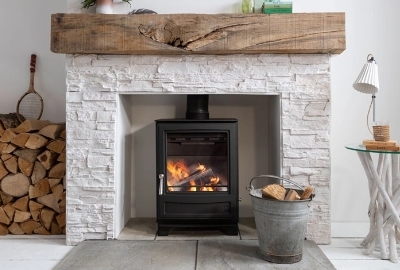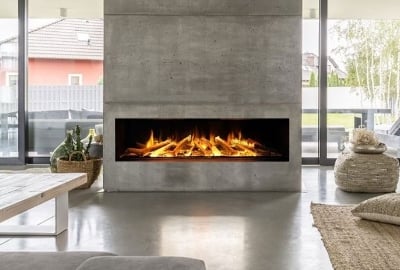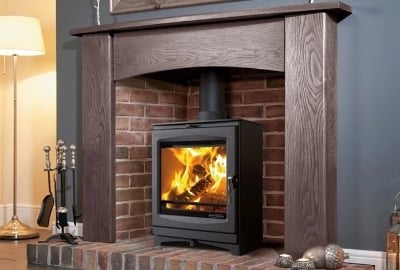
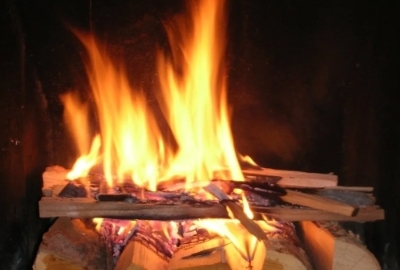
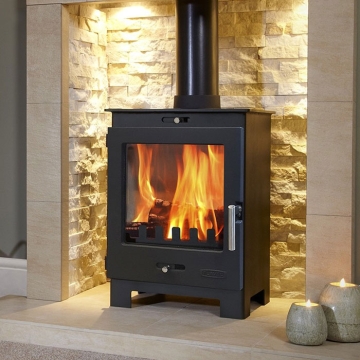
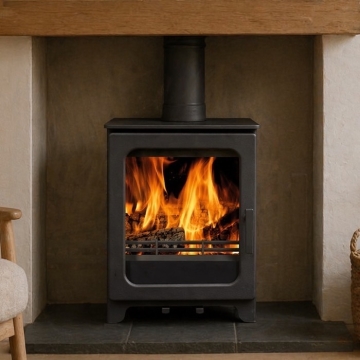
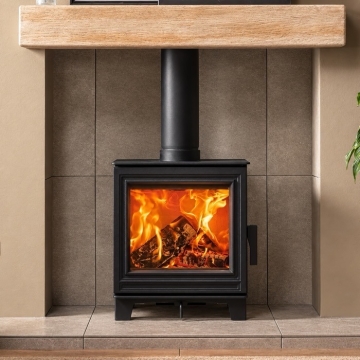
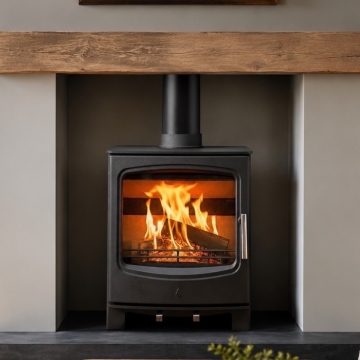
There is something very satisfying about lighting a wood burning stove and watching the first flames develop into a steady, warming fire. The process is simple once you know what your stove needs, but good fuel, plenty of air and a little patience make a big difference.
Every stove and chimney system behaves slightly differently, so the manufacturer's instructions for your appliance should always come first. As a general rule, however, a successful fire needs three things: dry fuel, enough heat to establish combustion and a good supply of air.
This guide explains how to light a wood burning stove using a top-down method, how to manage the air controls, when to add more logs and what to check if your fire is difficult to start. If you are stocking up before the heating season, our kiln-dried logs and fuel category includes logs, kindling and firelighters suitable for getting your stove ready to burn.
Contents
What You Need Before Lighting Your Stove
Open the Air Controls and Check the Stove
Build a Top-Down Fire
Light the Fire and Establish a Good Draught
When and How to Add More Logs
How to Keep Your Fire Burning Efficiently
Common Fire-Lighting Problems and Mistakes
Fire Safety and Good Stove Habits
What You Need Before Lighting Your Stove
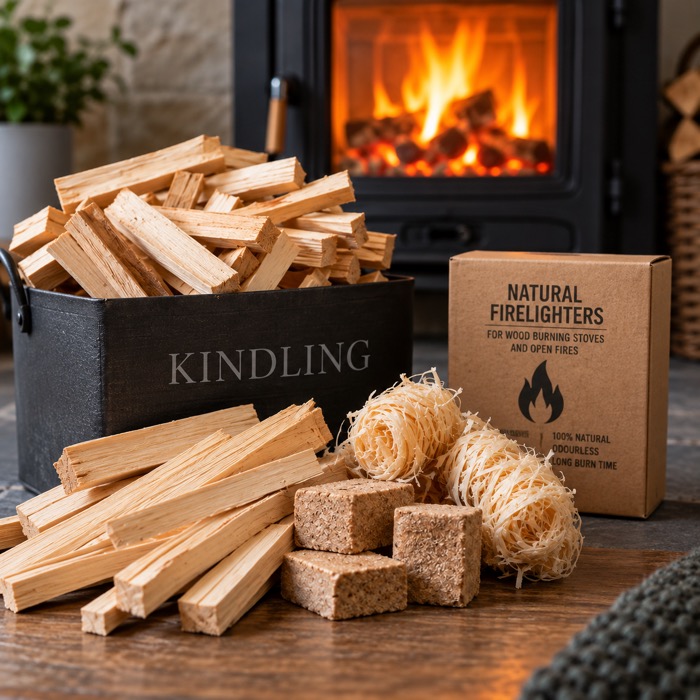
A reliable fire starts with the right materials. Trying to compensate for damp logs or oversized pieces of wood by adding more firelighter usually leads to frustration, smoke and a poor burn.
Before you start, have the following ready:
- Dry kindling, split into small pieces that will catch quickly.
- One or two suitable firelighters.
- Dry logs sized appropriately for your stove.
- A stove glove or suitable heat-resistant glove for operating hot controls and handles.
- A companion set or poker if required for arranging the fuel.
For wood burning, fuel moisture is particularly important. In the UK, ready-to-burn firewood should have a moisture content of 20% or less. Damp wood is harder to light, produces more smoke and deposits more soot and tar in the stove and flue. A simple moisture meter can be useful if you season or store your own logs.
StovesAreUs stocks kiln-dried logs, kindling and firelighters together in our fireside fuel range.
Open the Air Controls and Check the Stove
Before lighting, make sure the stove is ready to use. Remove excessive ash if required, check that the firebox and airways are clear, and make sure the door glass and seals are in good condition. If the stove has not been used for a long period, the flue and chimney should be confirmed clear and unobstructed before use.
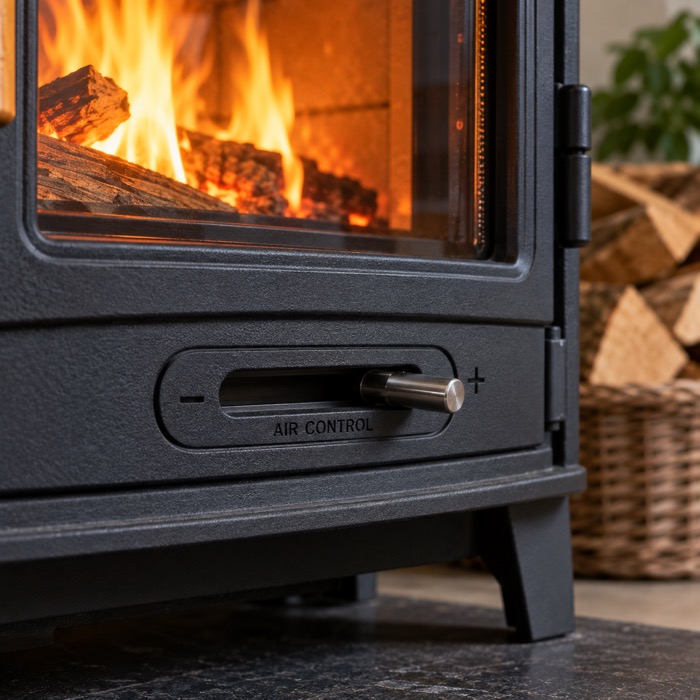
Next, open the stove air controls to the lighting position specified by the manufacturer. Most wood burners need a generous supply of combustion air when cold because the stove body and chimney have not yet warmed enough to establish a strong draught.
Do not assume that the controls on one stove work exactly like another. Some appliances have separate primary and secondary air controls, while others use a single control or an automatic system. The appliance manual is the correct reference for your particular model.
If you are replacing an older appliance or researching a new one, browse our range of wood burning stoves for modern models designed around efficient combustion and current EcoDesign requirements.
Build a Top-Down Fire
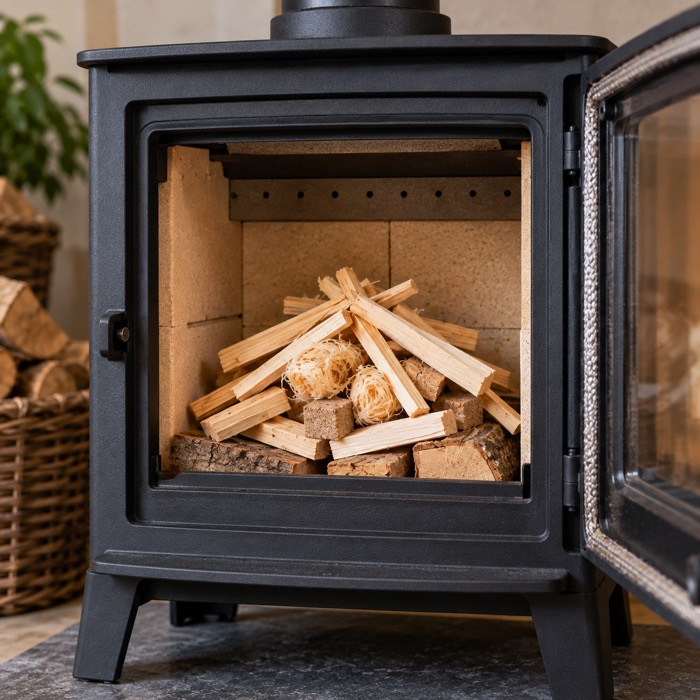
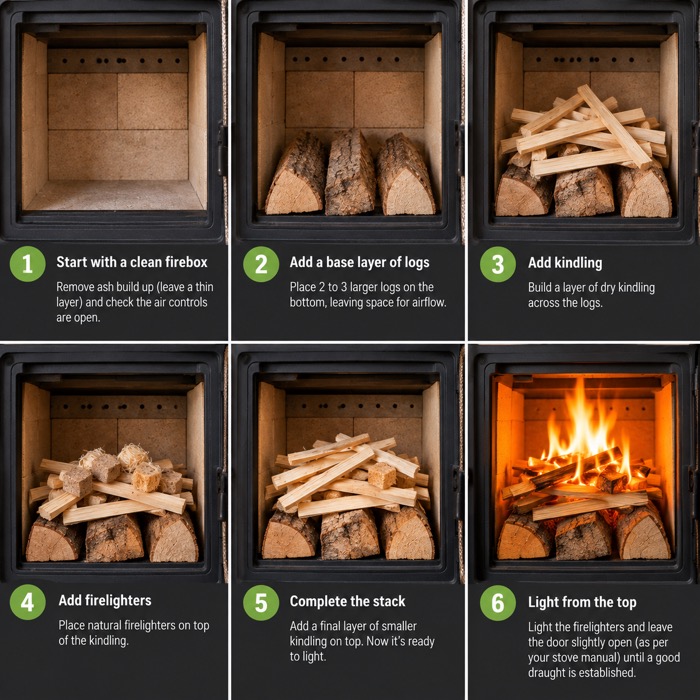
A top-down fire turns the traditional fire-building method on its head. Larger pieces of wood form the lower layer, smaller pieces and kindling sit above them, and the firelighter is placed near the top. The flame then burns down through the fuel as the fire becomes established.
A simple arrangement is:
1. Place one or two small, dry logs at the bottom of the firebox, leaving space for air to move around them.
2. Arrange smaller split pieces across the logs rather than packing them tightly together.
3. Add a loose layer of dry kindling above.
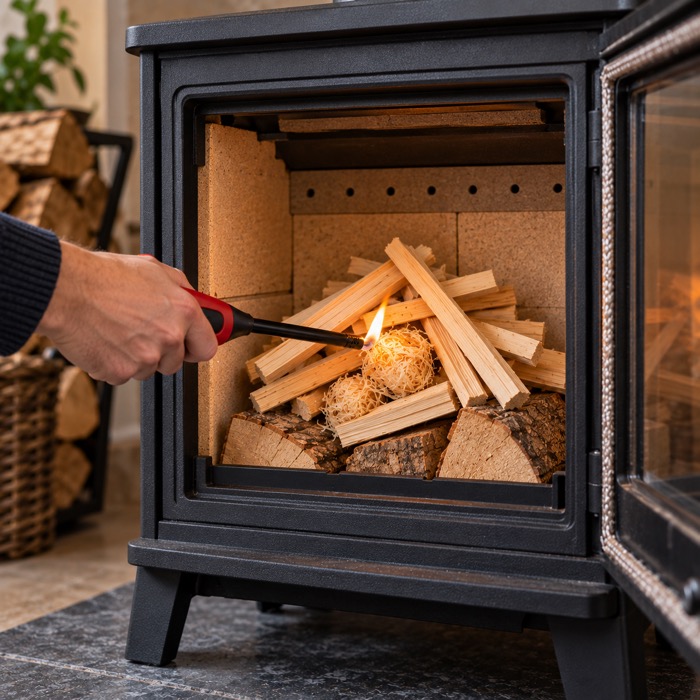
4. Place a suitable firelighter among or on top of the kindling.
Leave gaps between the pieces rather than building a solid stack. Fire needs oxygen, and an open structure allows the flames and hot gases to move through the fuel.
Many stove manufacturers recommend top-down lighting because it can establish a hot, clean fire quickly and reduce the smoky start-up period. Your stove manual may specify a particular lighting arrangement, so follow that where it differs from this general method.
Light the Fire and Establish a Good Draught
Light the firelighter and allow the kindling to catch. Keep the air controls in their recommended lighting position while the firebox and flue begin to warm.
The early stage matters because a warm flue produces a stronger draught. Once the kindling is burning vigorously, the flames should begin to spread to the smaller logs below. Avoid rushing this stage by adding a large quantity of fuel before the stove has established a good flame.
Some stove manuals permit the door to be left slightly ajar for a short period during lighting to help establish draught. Others specifically instruct users to keep the door closed. Always follow the instructions for your appliance and never leave a lit stove unattended with the door open.
Once the fire is established and the stove is warming, close the door fully if it is not already closed. Adjust the air controls gradually according to the manufacturer instructions rather than shutting the air supply down suddenly.
When and How to Add More Logs
Wait until the initial fuel is burning well and a glowing ember bed has begun to form before adding larger logs. Adding too much cold wood too early can cool the firebox and turn a promising fire into a smoky one.
When refuelling, open the stove door slowly. Pausing with the door slightly open for a moment can allow the pressure to equalise and encourage smoke to continue travelling up the flue rather than spilling into the room.
Add one or two appropriately sized dry logs, keeping within the fuel load stated by the stove manufacturer. Give the fresh fuel enough air to ignite properly before returning the controls to the normal running position.
Little and often is usually better than overloading the firebox. A stove packed tightly with logs has less room for air to circulate and may not burn as cleanly as a correctly loaded appliance.
How to Keep Your Fire Burning Efficiently
Once your fire is established, the aim is not simply to keep it alight. You want the wood to burn cleanly and steadily while getting useful heat from the fuel.
Avoid closing the air controls too far in an attempt to make the logs last longer. Starving a wood fire of oxygen can lead to incomplete combustion, a dirtier stove glass and increased deposits in the flue. Equally, running the appliance too hard can waste fuel and risk overfiring the stove.
Use the settings recommended in your stove manual and look for a lively, controlled flame rather than a fire that is either smouldering or roaring uncontrollably.
Good fuel storage helps too. Keep logs protected from rain while allowing air to circulate around them. Our log stores are designed to keep firewood organised and ventilated until you need it.
Once the stove is hot, a stove fan can also help circulate warm air away from the appliance and further into the room.
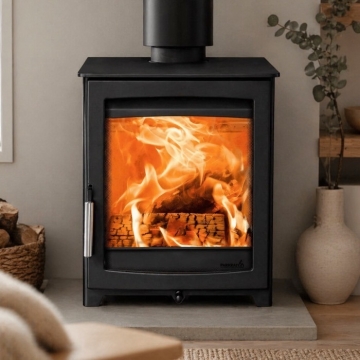
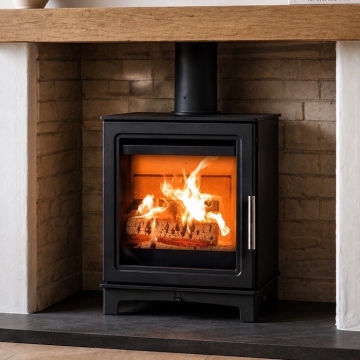
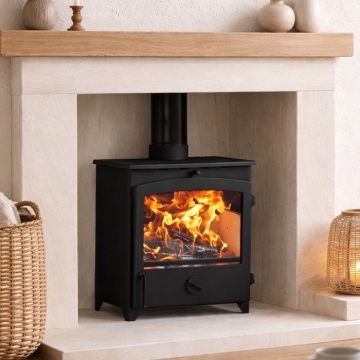
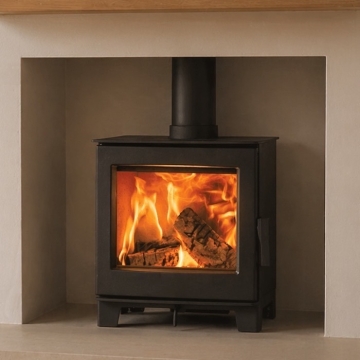
Common Fire-Lighting Problems and Mistakes
If your stove is difficult to light, the problem is usually easier to solve by checking the basics than by repeatedly adding more firelighter.
The logs are damp: Wet or poorly seasoned wood absorbs heat before it burns properly. Use dry, ready-to-burn fuel and check suspect logs with a moisture meter.
The kindling is too large: Kindling needs a high surface area so it catches quickly. Split it smaller and build a loose stack with air gaps.
There is not enough air: Check that the air controls are in the correct lighting position and that airways are not blocked by excessive ash.
The chimney is cold: A cold flue can produce weak initial draught, particularly after a long period without use. Allow the kindling stage time to warm the chimney.
Too much fuel has been added: A large load of cold logs can suppress the developing fire. Start small and add larger pieces once there is a strong flame and ember bed.
The fire keeps smoking: Persistent smoke entering the room should not be ignored. Stop using the appliance and have the stove, flue and ventilation checked by a competent professional before using it again.
Never use petrol, methylated spirits or other highly flammable liquids to start or revive a stove fire.
Fire Safety and Good Stove Habits
A good lighting routine should always sit alongside good stove safety. Keep combustible items away from the appliance, use the correct fuel, and never leave the stove operating with its door open unless the manufacturer specifically permits a brief ajar position during lighting.
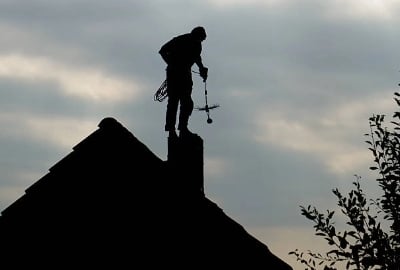
Your chimney or flue should be inspected and swept at suitable intervals for the fuel and level of use. Make sure any required ventilation remains unobstructed, and keep a working carbon monoxide alarm in the room in accordance with the applicable requirements and manufacturer guidance.
When removing ash, allow it to cool fully and use a suitable non-combustible container. Remember that apparently cold ash can retain hot embers for a surprisingly long time.
A few practical tools make everyday stove ownership easier. Our stove and fireplace accessories range includes companion sets, log baskets, fuel, stove fans and maintenance products for keeping the fireside organised.
Once you have found the lighting method and air settings that suit your stove and chimney, getting a clean, reliable fire going quickly becomes second nature. Start with dry fuel, give the fire plenty of air while it establishes, let the stove warm properly and add larger logs only when the initial fire is burning strongly.
If your stove behaves differently from the general steps above, always follow the appliance manufacturer instructions. Every stove and flue system has its own characteristics, and the correct operating method for your model takes priority.