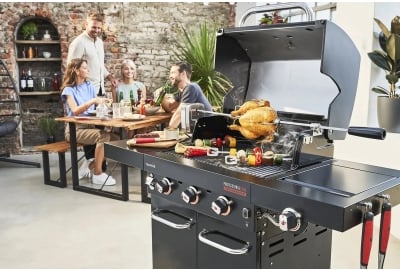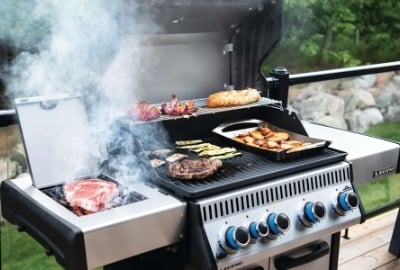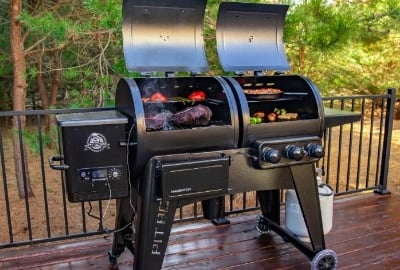
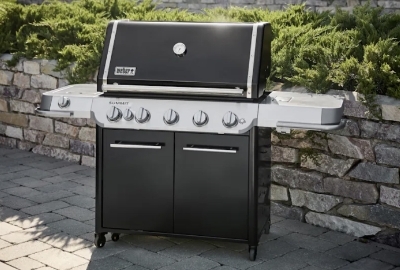
Before choosing the right BBQ, it’s worth taking a step back and thinking about how it will fit into your lifestyle. Are you planning relaxed weekend grilling sessions, or do you envision hosting larger gatherings throughout the summer? The way you cook outdoors should feel easy and enjoyable, so considering your space, routine, and preferences early on can help narrow down the options.
Contents
What should you look for in a gas BBQ?
How to cook on a gas BBQ
What type of gas is best for you?
How to connect a gas bottle to your BBQ
What should you look for in a gas BBQ?
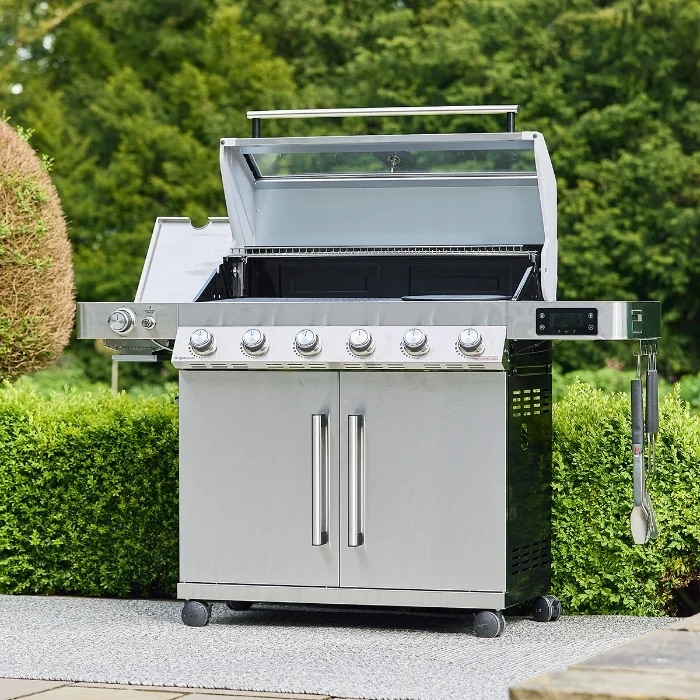
Think about how many people you’ll typically cook for, how often you’ll use the BBQ, and what type of food you’ll cook when weighing up features. Traditional gas BBQs range from small two burner models to large six-burner setups (or more), while planchas, built-in grills, portable stoves, and hybrid dual-fuel options offer different cooking styles. Location is also important. If you need portability, LPG models using propane or butane bottles are ideal, whereas natural gas BBQs connect to the mains and require professional installation.
Key features to look for include a lid or hood to lock in heat, side burners for sauces or searing, built-in thermometers, warming racks, fat collection cups, and storage space. Extras such as rotisseries, tool hooks, bottle openers, and locking wheels can add convenience but aren’t essential. Finally, consider build quality, durability, and budget. Higher-end models often last longer, withstand harsh weather, and provide more precise temperature control.
How to cook on a gas BBQ
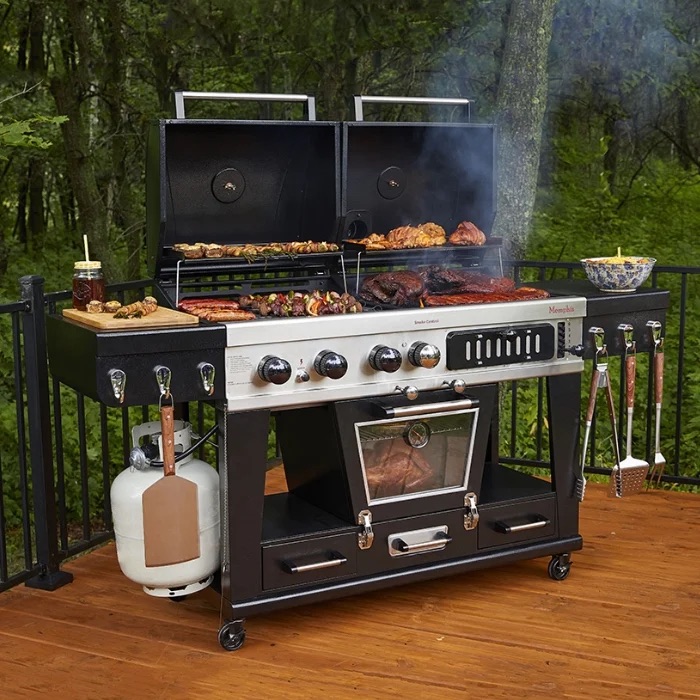
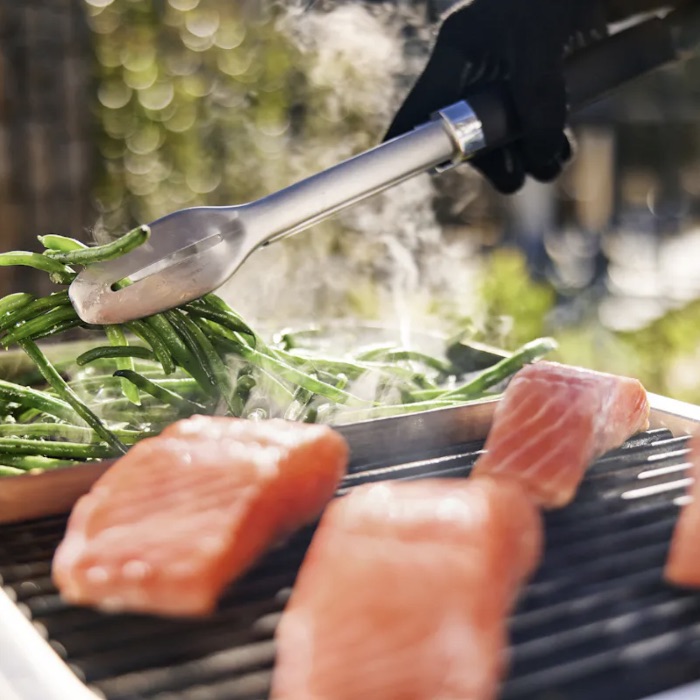
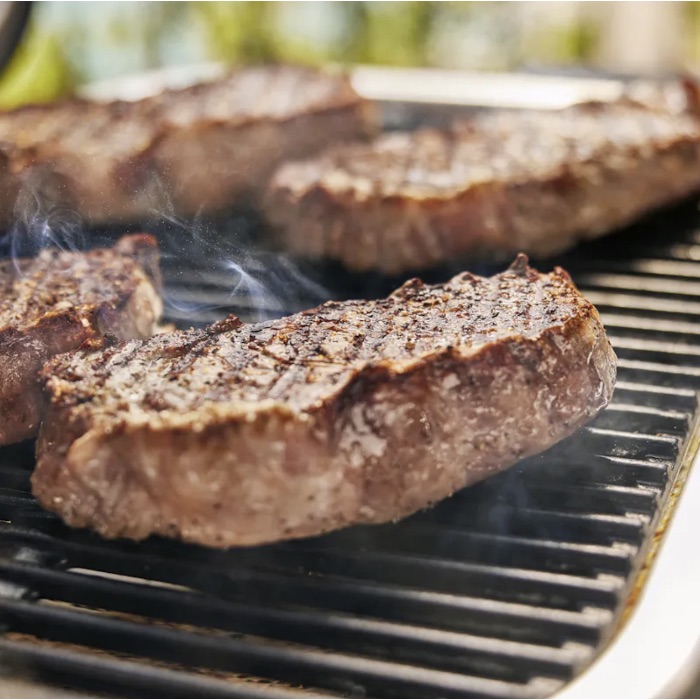
Cooking on a gas BBQ is similar to cooking on a regular stovetop, but with the added benefit of high heat and a grill surface that gives food a charred, smoky flavour. The grill is usually preheated with the lid closed to reach the correct temperature. Food is placed directly on the grill for quick cooking, or off to the sides for a slower cook using indirect heat. The lid can be closed while cooking to maintain a consistent temperature and ensure the food cooks through.
Gas BBQs are perfect for cooking meats like burgers and sausages, as well as large cuts of meat on the bone or even whole chickens. They’re also great for charring vegetables and grilling cheeses like halloumi.
What type of gas is best for you?
There are two main types of gas BBQs to choose from: liquified petroleum gas (LPG) and natural gas. The right option depends on how you plan to use your BBQ. LPG BBQs are fuelled by propane or butane tanks (also known as gas bottles), which are connected to the BBQ via a gas hose. Gas bottles can be easily replaced once empty, making LPG BBQs portable and ideal for areas without a natural gas supply.
Natural gas BBQs are connected directly to the mains gas supply and provide a continuous source of fuel. Unlike LPG models, they don’t require bottle changes, but they are not portable and are best suited for outdoor kitchens. Installation must be carried out by a Gas Safe registered engineer.
How to connect a gas bottle to your BBQ
Connecting or changing a gas bottle on your BBQ is relatively simple. You’ll need a gas hose and a regulator, which are often included when you purchase the BBQ. Always make sure the hose and regulator are compatible with your gas bottle type.
Follow these steps to connect your gas bottle safely:
- Turn everything off. Before you begin, ensure all BBQ burners are switched off, and that the gas bottle valve is fully closed.
- Check the hose and regulator. Inspect the gas hose for any kinks, cracks, or damage that could cause a leak. Make sure the regulator is in good condition and suitable for your gas bottle.
- Attach the regulator to the gas bottle. Place the regulator onto the bottle valve. This is usually done by screwing it on, although some models use a clip-on fitting. Always refer to the manufacturer’s instructions before connecting to ensure you know which type you have.
- Connect the hose to the BBQ. Attach the gas hose to the BBQ’s gas inlet. The gas bottle should be placed upright either beside or underneath the BBQ, depending on the model.
- Check for leaks. Before lighting the BBQ, spray a mixture of dish soap and water onto the hose and regulator connections. Slowly open the gas bottle valve and watch for bubbles. If bubbles appear, this indicates a leak and the gas should be turned off immediately.
- Light the BBQ. If no leaks are present, the BBQ can be safely lit and you’re ready to start grilling!